

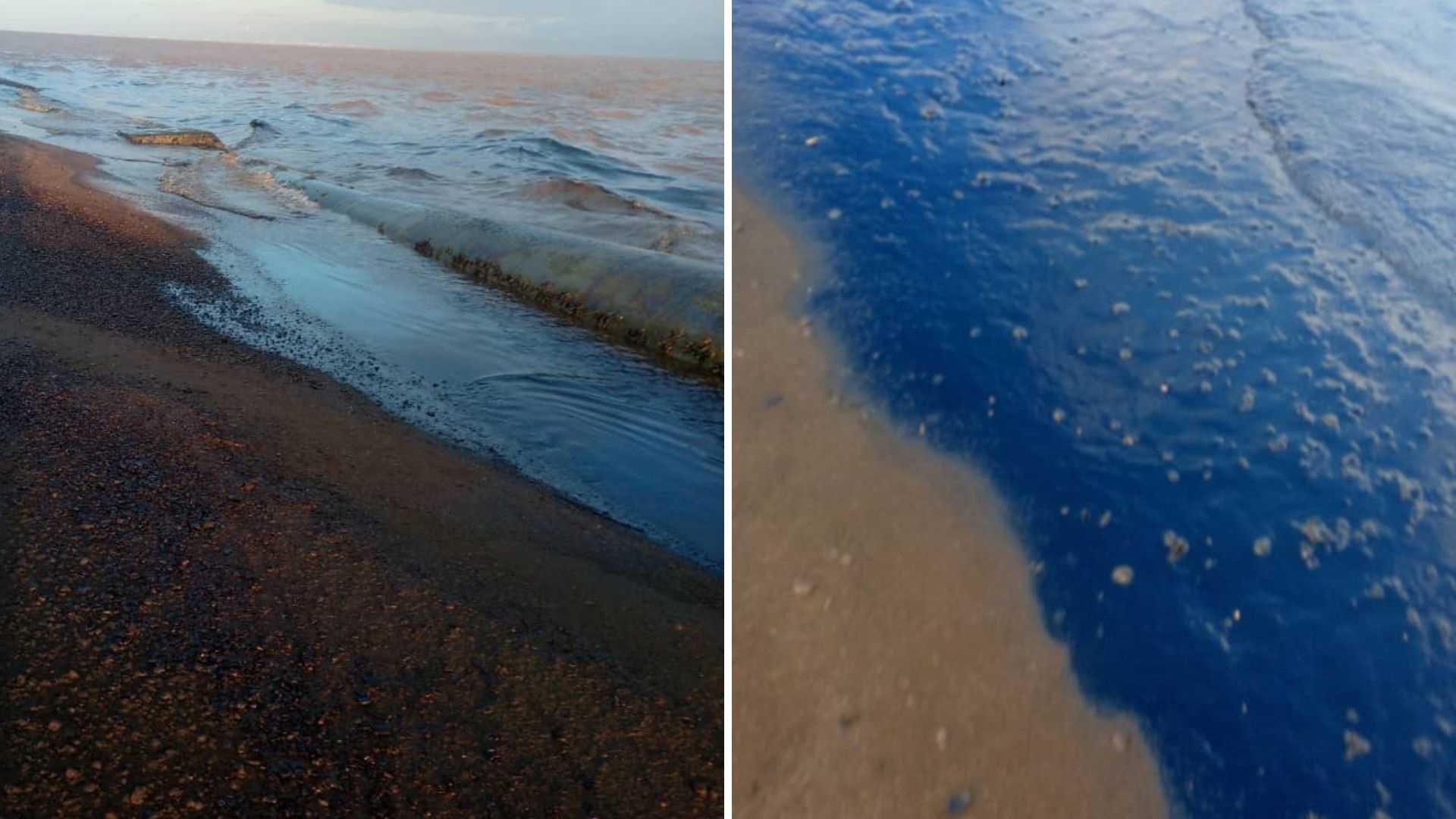
Fishermen from Falcón State in north-western Venezuela, recorded a video of an oil spill that is the 70th that has occurred since the end of 2019 when they began to occur in the Gulf of Coro, affecting artisanal fishing, marine biodiversity, and even migratory birds that visit these areas with special ecological characteristics.
lapatilla.com
The video was recorded on January 19th, after seeing the oil stain that extends towards traditional fishing areas in western Falcón.
The fishermen followed the black slick of oil until they reached the area where the leak is, which they located in the Punta Caimán area, specifically in the LOL-3 Puerto Miranda-Cardón oil pipeline. The oil is already reaching the Paraguaná Peninsula.
When consulting with the fishermen in the affected areas, they say that they are constantly called to meetings, but solutions never come, since the Golfete ends up polluted again and again.
The video also shows this message: “Today, Sunday, January 19th, of this year 2025, concern is once again raised, but this time it is more alarming, what are they going to do to us, the fishermen below, and that for some they remain silent in favor of the one who harms, but we cannot remain silent about such great damage. This has been going on for more than 15 days, and yes, they certainly tried to correct it three days ago, but the wrong worsened. We have been notifying for some time that this pipe has expired, that this soda cracker cannot hold out any longer. How much more will they kill us who produce.”
The declarants also reported that PDVSA is aware of the problem leak, which began on January 4th because they themselves (the fishermen) notified the oil monopoly, and although they have been there for two days, they have not been able to complete the repair work due to the waves and the access difficulties, and that they could reach Mitare by road, but the road is also in very bad conditions.
On January 20th, teams from the fishermen’s councils, security agencies and PDVSA tried to reach the site with materials to contain the oil spill and also to correct the crack in the pipeline, but according to the fishermen they were unable to get there due to the weather conditions.


They do not want to lose their livelihood
Fishermen from Punta Cardón, Tiguadare, Tacuato, Río Seco, Ocorote, Médano Blanco and Mitare are concerned about the lack of immediate attention to the oil spills and gas leaks.
They hope that the Golfete can be cleaned up, because it is the livelihood of their families, and it is also an ancestral way of life that they do not want to lose.
They continue to ask for the change of location of the underwater pipelines, which crisscross the Golfete de Coro, and carry crude oil and gas from Zulia to the Amuay and Cardón refineries, which are part of the Paraguaná Refining Complex (CRP).


When consulting oil workers, they reported that due to the diminished delivery of crude oil to the refinery, they realized that there could be a crack in the pipeline, so they asked Pdvsa Occidente to carry out the inspection that took several days.
In addition, they reported that the valves that are in the area cannot be closed, because they are already damaged. These are automatic safety trigger valves that when they register low or high flow of material, they should close automatically.
“Due to the lack of maintenance for many years, the salt ate them and they became inoperative. There is no exact number of crude oil losses, but it is estimated that in this case there were at least 90,000 barrels of crude oil, because the spill covers already from coast to coast,” said a worker who preferred to remain anonymous.

The fishermen also hope that a strong breeze will start to blow, as is usual in Falcón state, because a short distance away, in Punta Caimán itself, there is a gas leak that has been going on for months and this represents a great danger. “The two together could cause an explosion,” said a fisherman.
“Before all these spills, we could make up to 1,000 dollars in 15 days, now the mullet was coming in, and with these spills we are going backwards again. We prefer that they change the pipeline to another place and do a cleanup of the Golfete that will last over time, so that it can return to being the same as years ago. Letting the Golfete die is not for revolutionaries,” said another fisherman.
Affected families
Professor and marine biologist Eduardo Klein posted on his social media the gas spill that has been active since November 30th of last year.
“There is no problem because (supposedly) we all have gas in our homes.”
It is estimated that some 5,000 families live in the communities around the Gulf of Coro and live off artisanal fishing.

In the Paraguaná Peninsula alone there are 16 fishermen’s councils that make up the South-North axis, which are from the Carirubana municipality and one from Miranda, distributed among 1953 fishermen and 350 artisanal fishing boats.
At the beginning of last year, the national and regional government together with public institutions carried out an environmental study in the Gulf of Coro. However, the results have not been made public.